
Essential Safety Tips for Sharing the Road with Semi-Trucks
Every time you drive near a semi-truck, you’re navigating alongside one of the largest vehicles on the road. These trucks carry massive loads and operate under unique limitations and hazards, making defensive, informed driving lifesaving. If you ever find yourself involved in an incident with a truck, consulting a semi truck accident attorney can make a significant difference in protecting your rights and understanding your options.
Learning to recognize the specific challenges posed by these commercial vehicles prepares you to make quick, responsible decisions and safeguard both your well-being and that of others on the highway. Adhering to basic but vital safety protocols is crucial for everyone’s overall safety.
Understanding Semi-Truck Blind Spots
Semi-trucks have extensive blind spots that can entirely obscure nearby cars from the driver’s view. These “no-zones” exist directly in front of the truck’s cab, just behind the trailer, and along both sides. If you cannot see the truck’s mirrors, it’s virtually certain the driver cannot see you either. Passing through these areas quickly and never lingering reduces your risk of a sudden collision, especially if the truck must change lanes or swerve to avoid an obstacle.
It’s important to remember that commercial truck drivers are often high off the ground, giving them a commanding view of the road ahead but leaving blind spots where smaller vehicles can easily disappear. Being proactive in avoiding a semi-truck’s blind spots means never lingering directly beside the truck’s trailer or directly behind it. It’s safer to pass a truck decisively and return to a spot where the driver has a clear line of sight to your vehicle.
Maintaining a Safe Following Distance
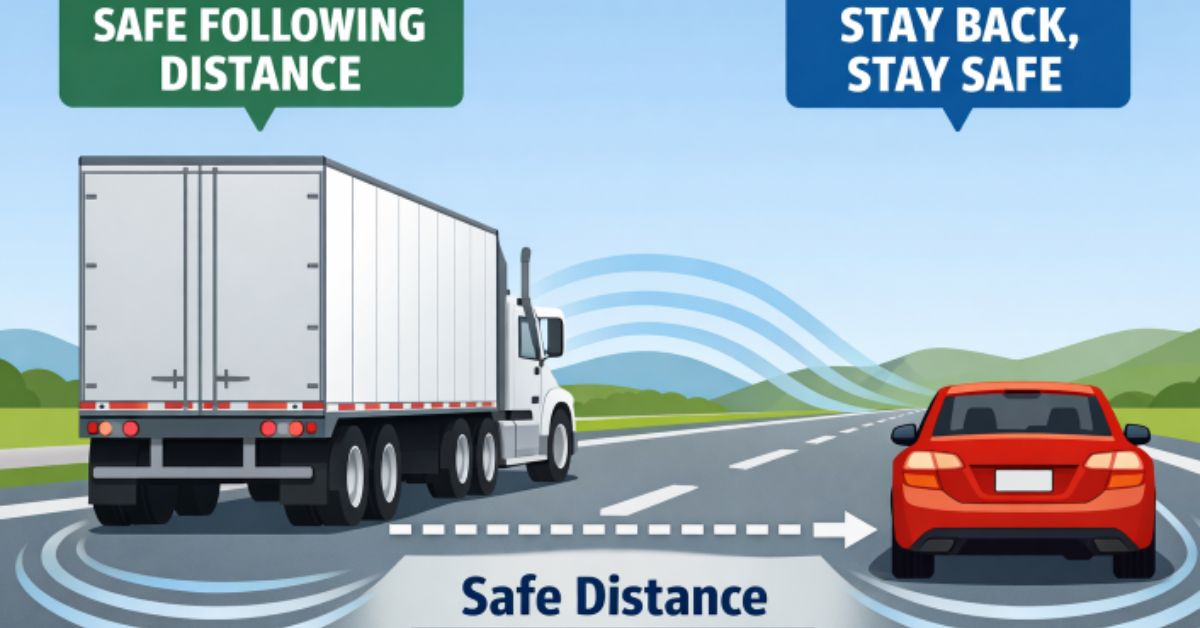
Because of their massive size and weight, semi-trucks need much more distance to come to a complete stop compared to a passenger car. Authorities recommend that drivers maintain a minimum four-second buffer behind any semi-truck. This cushion can provide the time needed to decelerate or veer away if traffic patterns change abruptly or the truck brakes without warning.
Having a safe following distance is particularly important in heavy traffic or inclement weather.Rear-ending a semi-truck can be far more devastating than striking a passenger car due to the immense difference in weight and the potential for your vehicle to slide underneath the trailer, a phenomenon known as underride. Such accidents are often deadly. To avoid these risks, it’s wise to give yourself even more space when driving at higher speeds or when visibility is compromised, such as during fog or at night.
Anticipating Wide Turns
Semi-trucks cannot maneuver like smaller cars. They often require additional space to make right- or left-hand turns at intersections, sometimes swinging out into the adjacent lane or making a delayed turn. Drivers should never attempt to squeeze between a turning truck and the curb. Instead, wait patiently behind the truck and give it ample room to navigate the intersection safely.
Even when a truck signals a turn, other drivers can underestimate the amount of space required and inadvertently end up in the truck’s path. When in doubt, it’s always best to yield and allow the truck the full lane or even multiple lanes it may need. This eliminates the risk of becoming trapped or sideswiped as the trailer tracks around the turn.
Adjusting to Road and Weather Conditions
Rough roads, snow, ice, rain, and fog multiply the dangers around large commercial vehicles. Trucks can lose traction or have difficulty stopping just like any other vehicle, but the heavier weight and load magnify the risks. Always increase your following distance and avoid sudden moves. According to the National Highway Traffic Safety Administration (NHTSA), defensive driving and adapting to poor conditions saves lives when sharing the road with trucks and other large vehicles.
Keep in mind that in extremely poor conditions, large trucks may kick up additional spray or debris, further reducing visibility for those traveling behind or beside them. Use your headlights, reduce your speed, and exercise patience whenever visibility is reduced. Never assume a truck driver has a clear view of your vehicle; signal your intentions well in advance of any lane changes or turns.
Being Patient and Avoiding Aggressive Driving
Aggressive maneuvers, such as quickly changing lanes in front of a semi, tailgating, or weaving in and out of traffic, pose a particular danger around trucks. Large commercial trucks need more time and space to brake and respond to the movements of smaller cars. Practicing patience and remaining calm during delays not only prevents frustration but also greatly reduces your risk of a serious crash. Remember that heavy trucks are constrained by weight and braking limitations, which limit their maneuverability.
It’s important to remember that truck drivers are often operating under strict delivery schedules and regulations that require rest breaks and limit hours on the road. Impatient or aggressive driving can escalate what should be routine maneuvers into dangerous situations. Your willingness to yield or slow down can make all the difference in avoiding accidents driven by pressure to move quickly.
Staying Alert and Avoiding Distractions
Distracted driving is a major contributor to accidents between cars and commercial trucks. Keeping your eyes on the road, avoiding cell phone use, and minimizing distractions inside the vehicle are critical when driving near any truck. Staying alert allows you to anticipate a semi-truck’s movements so you can respond quickly to any hazard that may arise.
Fatigue is another form of distraction. If you feel tired or less than fully alert, it’s wise to take a break before continuing your journey, especially on highways frequented by large trucks. Maintaining sharp focus is the best defense against unexpected actions by other drivers or sudden changes in road conditions. Simple habits like keeping both hands on the wheel and proactively scanning the road ahead help keep you attentive and ready to react.
Conclusion
Understanding the unique operating features of semi-trucks, such as their blind spots, slower stopping distances, and wide turn requirements, can help all drivers create a safer roadway environment. By observing these safety tips, exercising extra caution in poor weather, and making a conscious effort to drive patiently, every motorist can help reduce the risks posed by these large vehicles. For further reading on defensive driving strategies, visit this helpful Consumer Reports guide.
Also Read: Trucofax: A Powerful Shift in Modern Business Communication