
Choosing the Right Binding Method for Your Publication
When you’re bringing a printed project to life, the way you bind the pages is as important as the content itself. The right binding technique influences your publication’s durability, appearance, and user experience. Businesses aiming to make an impact with marketing collateral, portfolios, and catalogs often look for strong custom booklets for your business to ensure longevity and a professional finish. Among the most popular methods are perfect binding and saddle stitching, each catering to different needs and budgets.
Perfect binding gives your publication a sleek, bookshop-quality appearance, making it an excellent choice for thick materials and long-term use. Conversely, saddle stitching is an economical option ideal for thinner booklets and short-lived advertising pieces. Learning the differences and benefits of each method helps you match your publication’s purpose with the best possible format.
Your choice affects everything from visual appeal on a shelf to how well your publication resists wear and tear over time. Failing to align the binding method with your project’s intent can lead to unnecessary costs, a shorter lifespan, or an underwhelming presentation. That’s why understanding these two common binding processes is a critical step for small businesses, educators, creatives, and self-published authors alike.
Understanding Perfect Binding
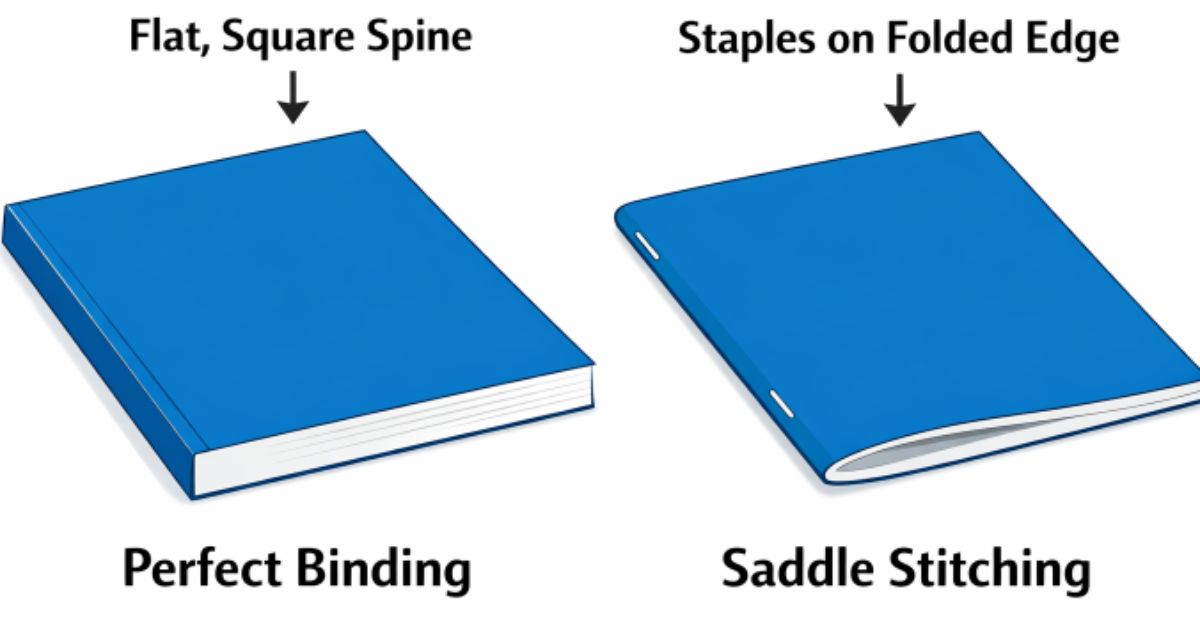
Perfect binding is a method in which the pages are gathered and glued along the spine with a robust adhesive, then covered with a flexible softcover. This construction is used for most paperbacks, extensive reports, corporate manuals, and certain magazines. The attractive, clean lines of a perfect-bound book communicate professionalism and quality while offering space on the spine for custom printing, which is advantageous for publications intended for display or frequent use.
Advantages of Perfect Binding
- Professional Appearance: The squared-off spine and crisp edges set a sophisticated tone, which makes an immediate impression in retail or client environments.
- Spine Printing: With a flat spine, you can add a title, author name, or a custom design, making library and retail shelving much easier.
- High Page Count Accommodation: Perfect binding supports a significant number of pages, making it the go-to choice for thicker publications.
- Durability: This method withstands repeated handling, making it suitable for cookbooks, annual reports, or training manuals.
Considerations for Perfect Binding
- Cost: The materials and process are generally more expensive than saddle stitching, especially when printing in small quantities.
- Lay Flat Limitation: Perfect-bound books tend not to lay flat when opened, which can be a drawback for publications requiring hands-free reading, such as reference guides.
Exploring Saddle Stitching
Saddle stitching joins folded sheets along the spine with metal staples, making it one of the simplest and most cost-effective binding options. It is a common choice for booklets, event programs, small catalogs, zines, newsletters, and promotional brochures. The saddle-stitching process is faster than perfect binding, allowing publishers to quickly produce and distribute short-term materials with limited budgets and tight timelines.
Advantages of Saddle Stitching
Cost-Effective: With fewer production steps and fewer materials required, saddle stitching is more budget-friendly, making it ideal for short runs process or disposable documents.
Quick Production: The simple stapling reduces turnaround times, allowing you to meet urgent deadlines without sacrificing basic durability.
Lay Flat Capability: Publications bound this way open flat, making them ideal for presentations, lookbooks, or guides where content needs to be viewed at-a-glance across two pages.
Considerations for Saddle Stitching
Page Count Limitation: There is a limit to how many pages saddle stitching can accommodate. Typically, this method works best for booklets between 8 and 64 pages. Attempting to bind more pages can result in a bulky or unstable publication.
Durability: Saddle-stitched books are less durable than perfect-bound books. For materials expected to be used frequently or kept for a long time, perfect binding is generally the better choice.
Despite these limitations, saddle stitching remains a highly practical solution for many print projects. Its simplicity and efficiency make it especially valuable for time-sensitive campaigns and materials with a shorter lifespan. When used appropriately, it offers an excellent balance between affordability, functionality, and visual appeal.
Making the Right Choice
To choose between perfect binding and saddle stitching, evaluate the following:
- Page Count: Heavier publications benefit from perfect binding. Publications of a lighter weight or with fewer pages can take advantage of saddle stitching.
- Budget: Projects on a tight budget or those with a short shelf life can stretch their printing dollars further with saddle stitching.
- Intended Use: If your audience expects a polished, lasting product, such as a yearbook or premium catalog, perfect binding meets those demands. For temporary pieces like event programs or short-lived product booklets, saddle stitching is often sufficient.
Weighing these criteria enables you to match your publication’s purpose with the most practical and visually appropriate binding type.
Conclusion
Selecting the right binding method is a crucial step in bringing your printed project to life, as it directly shapes how your audience experiences and perceives your work. Both perfect binding and saddle stitching offer distinct advantages, and the best choice ultimately depends on your publication’s purpose, budget, and expected lifespan. Perfect binding delivers a polished, durable finish suited to thicker, long-term materials, while saddle stitching provides a cost-effective, efficient solution for lighter, short-run projects.
By carefully considering factors such as page count, usability, and presentation goals, you can ensure your booklet not only looks professional but also performs well in its intended setting. Taking the time to align your binding choice with your project’s needs will help you maximize value, enhance readability, and create a lasting impression on your audience.
Also Read: Dubolsinho Dance Shock: A Stunning New Wave Explained