The 2026 Credential Shift: How AI-Driven Assessment is Changing the Way We Verify Expertise
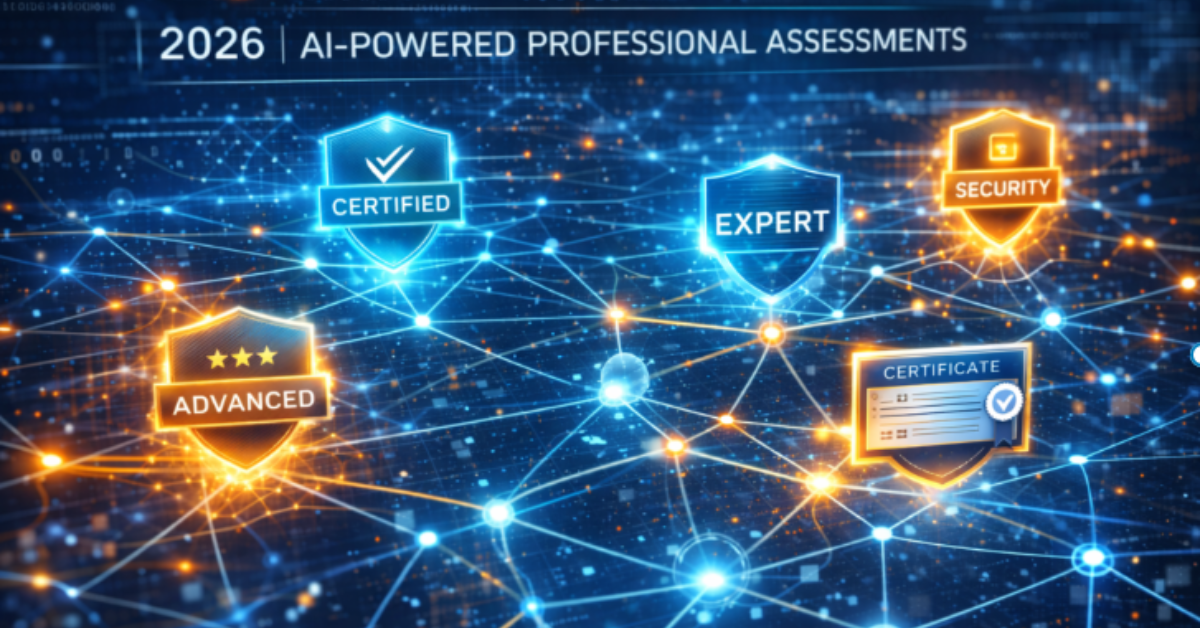
The professional landscape in 2026 looks nothing like it did a decade ago. Automation has absorbed routine tasks at every level—from data entry to basic legal research—pushing employers to demand something AI simply cannot replicate: verified, high-order human judgment. As a result, credentialing bodies around the world are retooling their exams, and the shift is more profound than most candidates realize.
Why Certifications Are Gaining Ground Again
For a few years after AI tools became mainstream, there was genuine debate about whether professional certifications still mattered. If a chatbot could pass a bar exam or produce flawless medical summaries, what was the point of the credential itself? The answer lies in what those credentials now measure.
Major bodies such as CompTIA, PMI, and SHRM have quietly overhauled their testing frameworks since 2023. New formats deprioritize memorization and heavily weight scenario-based, multi-variable problem-solving. Employers have followed suit—a 2025 LinkedIn Workforce Report noted a 34% increase in job postings that treat active, up-to-date certifications as non-negotiable requirements.
What AI-Driven Assessment Actually Looks Like
Modern computer-adaptive tests are not electronic versions of old paper exams. They use machine learning to adjust question difficulty in real time based on a candidate’s response pattern. A candidate who answers confidently and correctly is served increasingly complex scenarios; one who hesitates or errs receives a recalibrating sequence designed to locate the precise edge of their competency.
This has practical consequences. Candidates who rely on rote memorization often reach a plateau where the adaptive engine identifies gaps in applied reasoning—gaps that flashcard apps simply never expose. The exam is no longer testing what you know; it is testing how you think when the situation gets complicated.
The Obsolescence of Traditional Study Methods
Printed textbooks and static question banks were designed for a world where exams tested recall. That world is fading. When question difficulty shifts based on your last three answers, preparation must mirror that dynamism.
As AI continues to automate basic tasks, the value of human professional certification has shifted toward complex problem-solving. This change has made traditional study guides obsolete. To keep pace with these evolving standards, candidates are now prioritizing diagnostic tools that offer real-time feedback. Utilizing a realistic Practice Test allows learners to identify their logic-gaps before they enter the testing center, ensuring that their mental “imprint” of the material is both accurate and ready for the rigors of modern accreditation.
The Human Advantage Is Real—But It Must Be Proven
None of this suggests that human expertise is devalued. The opposite is true. Organizations pay a premium for professionals who can demonstrate verified critical thinking under pressure, precisely because AI tools cannot credibly do so. A certification earned under new adaptive frameworks carries genuine market weight that prior generations of credentials simply did not.
The credential shift of 2026 is, at its core, a quality filter. Employers have learned to distrust credentials earned under outdated frameworks and to trust those earned under rigorous, AI-informed ones. That distinction is increasingly visible on a résumé.
What Candidates Should Do Now
The path forward is practical: prioritize preparation tools built around adaptive logic, seek out platforms that analyze reasoning patterns rather than just correct answers, and treat every practice session as a diagnostic exercise rather than a performance.
Also Read: Tek-102: A Bold Step Toward Operational Excellence