Knowing Imagination: Where Creativity Becomes Knowledge
Knowing Imagination is a concept that blends creativity with understanding, showing that imagination is not separate from knowledge but deeply connected to it. While imagination is often associated with fantasy or creativity alone, this idea highlights its role in shaping how humans interpret, learn, and comprehend the world around them. It emphasizes that imagination can be a serious cognitive tool rather than a childish or unrealistic activity.
From early childhood to adulthood, people constantly rely on imaginative thinking to interpret experiences. When someone visualizes future outcomes, empathizes with another person’s situation, or mentally explores an idea before acting on it, imagination is actively guiding understanding. Knowing-Imagination reflects this process, where imagination supports insight, reasoning, and awareness.
This concept has gained attention in education, philosophy, psychology, and creative disciplines because it explains how humans go beyond surface-level information. Rather than simply absorbing facts, individuals use imagination to connect ideas, recognize patterns, and form meaningful interpretations that deepen learning and awareness.
The Philosophical Roots of Knowing Imagination
Philosophically, Knowing Imagination challenges the idea that knowledge is formed only through logic or sensory experience. Many thinkers have argued that imagination plays a crucial role in shaping human understanding. It allows people to explore ideas that cannot be directly observed and to reflect on abstract concepts such as justice, time, or identity.
Imagination enables individuals to mentally step outside their immediate reality. This mental movement allows them to consider alternative viewpoints, question assumptions, and explore moral or ethical possibilities. In this way, imagination becomes a pathway to deeper reflection rather than an escape from truth.
Knowing Imagination also supports the idea that understanding is not purely mechanical. Human thought is layered with emotion, memory, and creativity. By combining these elements, imagination contributes to a more holistic form of knowing that includes empathy, intuition, and personal meaning alongside rational thought.
Knowing Imagination in Learning and Education

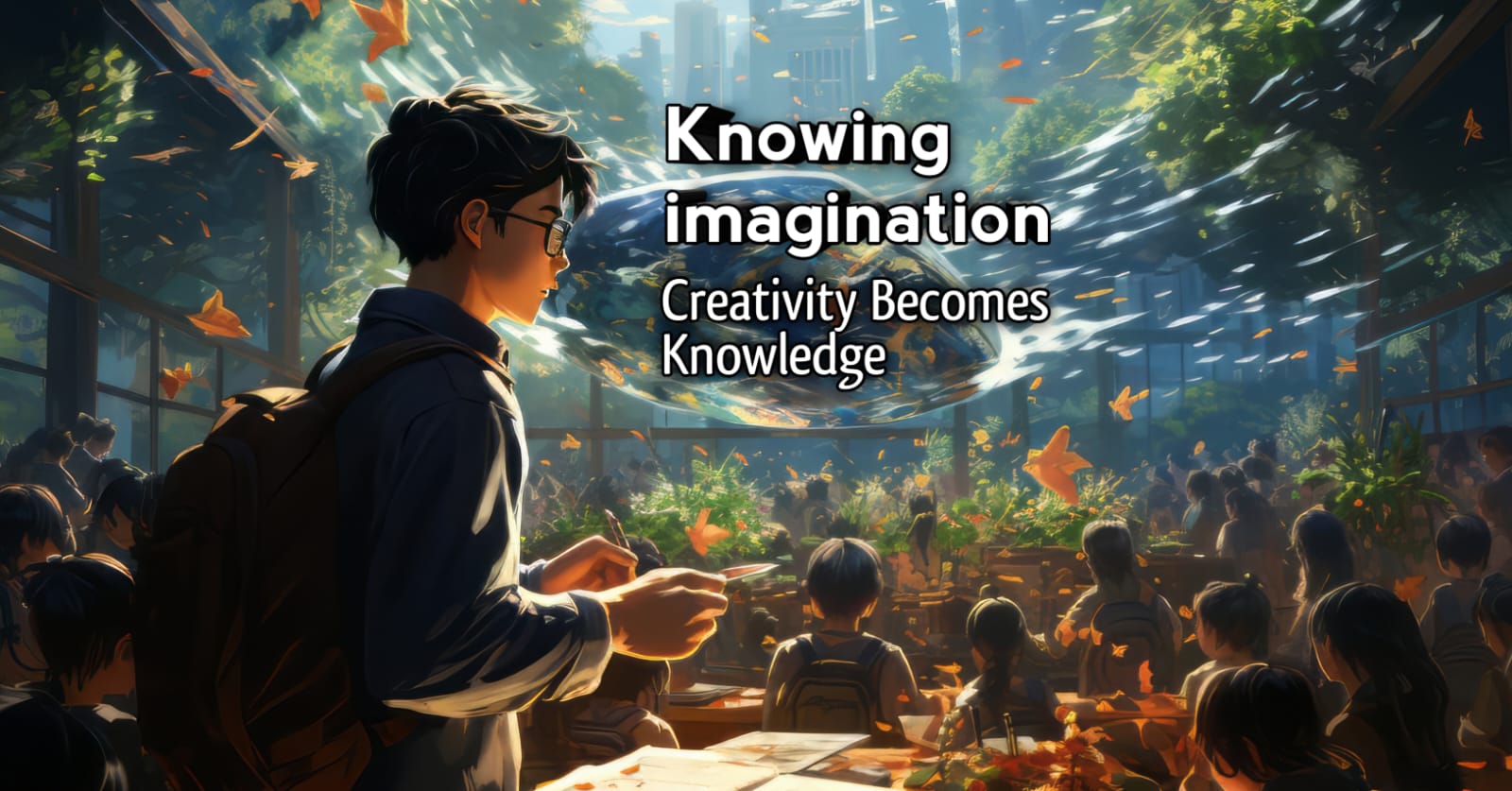
In educational settings, Knowing Imagination plays a vital role in how students engage with knowledge. Learning becomes more effective when learners are encouraged to imagine concepts rather than memorize information. Visualization, storytelling, and creative thinking help students understand ideas in a more lasting and meaningful way.
When learners imagine historical events, scientific processes, or literary worlds, they actively participate in knowledge creation. This imaginative engagement allows them to connect new information with prior experiences, making learning more relatable and easier to retain. It also fosters curiosity and motivation, which are essential for long-term learning.
Educators who recognize the value of Knowing Imagination often create environments where creativity and understanding coexist. Instead of limiting learning to rigid structures, they allow space for exploration and reflection. This approach helps learners develop critical thinking skills while also nurturing emotional and intellectual growth.
The Psychological Perspective on Knowing Imagination
Psychologically, imagination is closely tied to cognitive development and emotional intelligence. Knowing Imagination explains how people use mental imagery and creative thought to process emotions, solve problems, and make decisions. It supports mental flexibility and helps individuals adapt to new situations.
Imaginative thinking allows the mind to rehearse possibilities before taking action. This ability is essential for planning, goal-setting, and coping with uncertainty. By imagining outcomes, people can better prepare themselves for challenges and understand the potential consequences of their choices.
Knowing Imagination is also connected to empathy. When individuals imagine the feelings or experiences of others, they develop a deeper emotional understanding. This imaginative empathy strengthens relationships and improves communication, making it a powerful tool for both personal and social development.
Knowing Imagination in Creativity and Innovation
Creativity thrives when imagination and knowledge work together. Knowing Imagination explains how artists, writers, designers, and innovators transform ideas into meaningful creations. Imagination allows them to explore possibilities, while knowledge provides structure and context.
In innovation, imaginative thinking often precedes discovery. Many breakthroughs begin as imagined concepts that are later tested and refined. This process shows that imagination is not opposed to reality but is often the first step toward creating it.
Knowing Imagination also encourages originality. By combining existing knowledge with creative insight, individuals can generate new perspectives and solutions. This balance is essential in fields that require problem-solving, adaptability, and forward-thinking approaches.
The Role of Knowing Imagination in Everyday Life
In daily life, Knowing Imagination influences how people interpret experiences and make sense of their surroundings. From imagining future goals to reflecting on past events, imagination helps shape personal identity and decision-making.
People often use imagination to cope with challenges or uncertainty. By envisioning positive outcomes or alternative paths, they can maintain hope and resilience. This mental flexibility allows individuals to navigate complex emotional and practical situations with greater confidence.
Knowing Imagination also supports personal growth. It encourages self-reflection and awareness by allowing individuals to imagine who they want to become. This forward-looking perspective helps guide choices and motivates meaningful change over time.
Conclusion
Knowing Imagination reveals that imagination is not separate from knowledge but an essential part of how humans understand the world. It connects creativity with insight, emotion with reasoning, and experience with reflection. Through this connection, imagination becomes a powerful cognitive tool rather than a simple escape from reality.
Across philosophy, education, psychology, and everyday life, Knowing Imagination plays a vital role in shaping understanding. It allows individuals to explore ideas deeply, empathize with others, and engage meaningfully with knowledge. This makes learning richer and more personal.
By recognizing the value of Knowing Imagination, individuals and institutions can foster deeper thinking and creativity. Embracing this concept encourages a more balanced and human-centered approach to understanding, one that honors both logic and imagination working together.
FAQs
What does Knowing Imagination mean?
Knowing Imagination refers to the use of imaginative thinking as a way to gain understanding, insight, and knowledge rather than just fantasy or creativity.
Is Knowing Imagination important in education?
Yes, it helps learners understand complex ideas more deeply by connecting creativity with comprehension and personal experience.
How is Knowing Imagination different from regular imagination?
Regular imagination may focus on fantasy, while Knowing Imagination emphasizes understanding, reflection, and meaningful insight.
Can Knowing Imagination improve problem-solving?
Yes, it allows individuals to explore possibilities mentally, consider outcomes, and develop creative solutions.
Does Knowing Imagination play a role in emotional intelligence?
Absolutely, it supports empathy and self-awareness by helping individuals imagine perspectives and emotions beyond their own.