
Future Trends in Restaurant Payroll Management
The restaurant industry is experiencing rapid change as new technologies and strategies emerge, redefining how operators manage payroll. From minimizing manual work to boosting accuracy and employee satisfaction, the landscape is evolving quickly. Leveraging innovations like tip pooling software is becoming an integral part of the efficient operations of both independent restaurants and multi-unit chains.
Understanding these trends is vital for restaurant owners and managers aiming for compliance, efficiency, and attracting talent. As technology becomes more integrated into payroll, new methods address industry challenges. With stricter labor laws, diverse employee needs, and operational complexities, effective payroll management now encompasses real-time capabilities, advanced analytics, and seamless handling of scheduling and tax compliance. These changes reduce administrative burdens and improve workplace environment. Payroll errors pose risks like legal trouble, staff dissatisfaction, and reputational damage. Leveraging recent advances helps streamline processes and supports restaurants’ success in a competitive landscape.
Automation and AI Integration
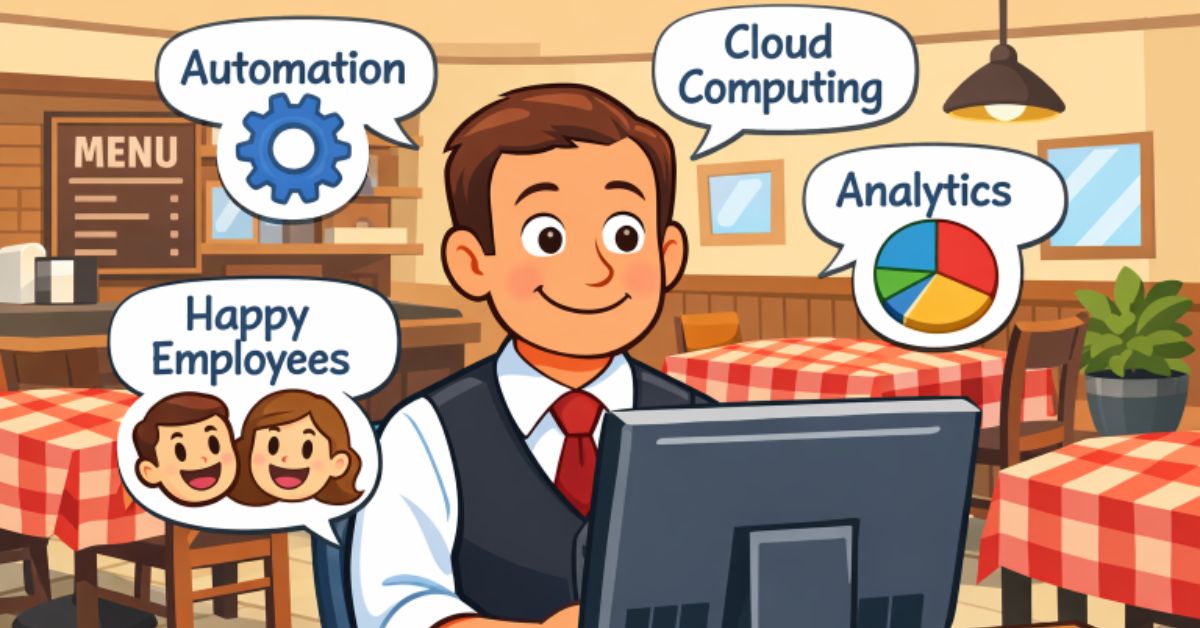
Automation and artificial intelligence are revolutionizing restaurant payroll by eliminating much of the manual work that leads to errors and inefficiencies. AI-powered payroll platforms can automatically calculate complex wage structures, schedule pay runs, and update tax deductions with minimal human intervention. This significantly reduces the risk of costly mistakes and allows restaurant managers to spend less time on administrative tasks and more time focusing on hospitality and service quality. Major players like Oracle NetSuite are already leveraging AI tools designed specifically for the unique demands of the restaurant sector, helping businesses to coordinate operations across numerous locations with ease. AI can even predict overtime trends and labor needs, improving both scheduling and cost control.
Cloud-Based Payroll Systems
Moving payroll management to the cloud is a trend that is quickly becoming the industry norm. Unlike legacy desktop software, cloud-based payroll systems give restaurant owners and managers 24/7 access to payroll data from any device with an internet connection. This flexibility is a game-changer for restaurants operating on different schedules or across multiple locations. Beyond convenience, cloud solutions deliver robust security features, seamless software updates, and reliable data backups. They significantly simplify compliance by ensuring restaurants are always working with the latest legal deductions and payroll rules. Many platforms also facilitate integration with other critical business tools, creating a streamlined and unified operations suite.
Comprehensive HR and Payroll Platforms
Integrated systems that combine payroll with broader human resources (HR) capabilities are seeing rapid adoption. These platforms handle every stage of the employee lifecycle, from onboarding and scheduling to benefits management and compliance tracking, all within a centralized interface. By consolidating various administrative functions, these comprehensive platforms minimize the risk of duplicated or conflicting data. They also help ensure payroll accuracy by pulling wage and scheduling information directly in real time. For restaurants pressed for time and resources, having everything under one digital roof significantly reduces headaches and frees up staff for more valuable tasks.
Outsourcing Payroll Services
The complexity of restaurant payroll, especially with fluctuating headcounts and seasonal hiring, makes outsourcing increasingly attractive. Professional payroll service providers offer dedicated expertise in compliance, wage calculations, and benefit administration. Outsourcing not only reduces the risks of payroll errors and associated penalties but also relieves restaurants of the ongoing burden of keeping up with changing local and federal regulations. With payroll off their plate, operators and managers can reallocate valuable time and energy to focus on guest satisfaction, menu innovation, and workforce engagement. The move to outsourcing is widespread across hospitality businesses of all sizes, as it delivers both peace of mind and operational efficiency.
Real-Time Payroll Processing
As more employees seek financial flexibility, real-time payroll or on-demand pay is taking hold in the restaurant industry. Instead of waiting for the traditional payday, employees can access their earned wages immediately after their shifts. This is especially appealing in a sector known for hourly and tipped work, helping restaurants build trust and employee satisfaction. Real-time payroll can also be a significant recruiting differentiator in a tight labor market. It demonstrates that the restaurant values its workers and responds to their financial realities, which can help retain employees and reduce turnover.
Compliance and Regulatory Updates
Restaurant payroll is heavily influenced by local, state, and federal regulations, which are continually evolving. Future payroll systems will need to seamlessly integrate compliance updates, automatically adjusting for new rules on minimum wage, tip allocation, overtime, and tax withholding. This will help protect businesses from expensive compliance missteps and the risk of lawsuits, ensuring smooth, penalty-free operations as labor laws change.
Employee Self-Service Portals
Giving employees greater control and transparency through self-service portals is another trend reshaping restaurant payroll. These secure online portals allow staff to review their pay stubs, update direct deposit details, access tax documents, and even request time off without going through management. This not only empowers employees but also reduces time-consuming back-and-forth for administrative staff, making operations smoother on both sides.
Data-Driven Decision Making
Modern restaurants rely on payroll data for a competitive edge. Advanced platforms provide analytics on labor costs, overtime, scheduling, and turnover, helping managers make better staffing, menu, and wage decisions. These strategies lead to financial savings and improved workforce planning. As highlighted in the Harvard Business Review, analytics are vital in payroll management. Technology, automation, cloud solutions, and data analytics are transforming restaurant payroll, ensuring compliance, team satisfaction, and long-term success.
Conclusion
The future of restaurant payroll is driven by technological advancements like AI automation, cloud systems, and integrated platforms that boost efficiency, accuracy, and adaptability. These innovations reduce manual work, improve data access, and help restaurants operate smoothly and stay compliant. Embracing digital payroll solutions enables better employee satisfaction, cost control, and informed decision-making. Investing in these technologies is a strategic step toward long-term growth, resilience, and competitiveness in a constantly evolving industry.
Also Read: Kotora Melnkalne: A Fascinating Hidden Destination